


Exporting data from WordPress is a common requirement for site owners, developers, and content managers. Whether you need to export WordPress posts to CSV, download users to Excel, back up blog content, or migrate data to another platform, having your website information in a structured format gives you full control.
WordPress includes a built-in export tool, but it primarily generates XML files and offers limited filtering options. If you need to export WordPress posts to CSV, export users to Excel, include images, or filter specific content types, you may need a more advanced solution.
In this complete guide, you’ll learn:
- How to export WordPress posts using the default tool
- How to export WordPress posts to CSV or Excel
- How to export users, comments, categories, and tags
- How to export posts with images
- The best method for exporting large amounts of WordPress data efficiently
By the end of this article, you’ll know exactly which export method fits your workflow.ordPress posts to CSV, saving time and simplifying your workflow. Let’s dive in!
Introduction: What does “export WordPress posts to CSV” really mean?
WordPress export posts to CSV means converting your WordPress blog posts into a structured Comma-Separated Values (CSV) file, which can be opened and edited in spreadsheet programs like Excel or Google Sheets. This process extracts key post data, such as titles, content, authors, categories, tags, and publication dates, and organizes it into columns and rows. A CSV file is useful for backups, migrations, or bulk editing outside of WordPress.
You can export WordPress posts to CSV using built-in tools like the WordPress export posts feature under Tools in the dashboard, or plugins such as the WordPress posts bulk editing plugin. This plugin allows customization, letting you choose which fields to include.
Once exported, the CSV file can be used to import posts into another WordPress site, analyze content trends, or perform large-scale updates before reimporting. This method is especially helpful for developers, marketers, and site administrators managing large amounts of content efficiently.
Why do you need WordPress export posts?
There are several reasons to export WordPress posts. The simplest reason is to export blog posts to WordPress and save them to your computer.
However, The most important one is to export WordPress posts to another WordPress site.
Another common use case is bulk editing data after exporting WordPress posts to CSV.
Whatever reason you have for WordPress export posts, you need to use one of the below methods to successfully export posts from WordPress.
How to export posts from WordPress?
Export posts WordPress is easier than you might think. There are plenty of methods and tools that you can use to safely export and import WordPress posts.
Let’s review how to export WordPress posts to CSV with these methods.
Method#1: Export WordPress posts to CSV by WordPress default
The simplest and most standard way to export WordPress posts to CSV is to use the export tool in WordPress. With the help of this tool, you can easily export any post and import it on another site from the import section.
For this purpose, just follow the steps below:
- In your WordPress dashboard, go to Tools and select Export.
- On the Export page, enable the Posts option.
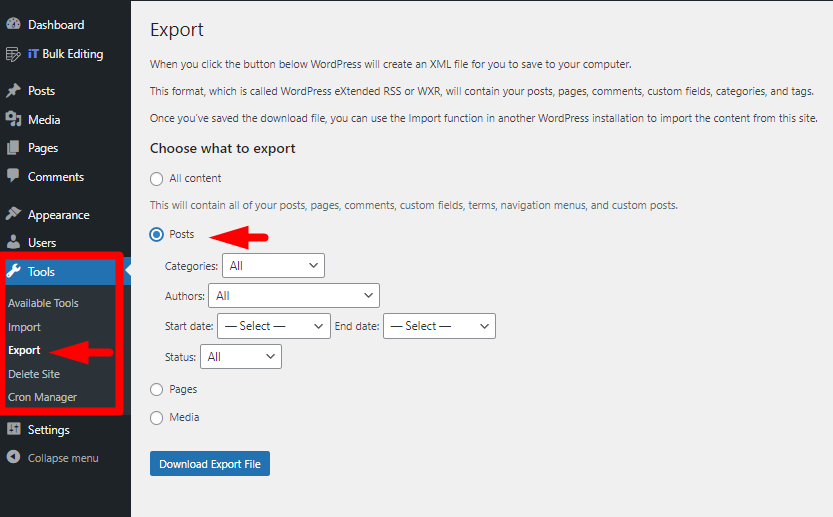
- Then, choose one of the below options to export post details to a CSV file.
Export WordPress posts from specific categories
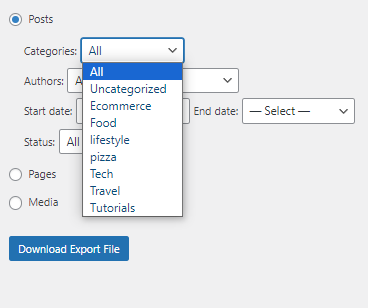
The first option in exporting WordPress post details is Categories. This is useful when you want to export some posts which are published in a specific category.
When you open the combo box of categories, you can see a list of categories, and you can choose one of them to export the post related to it.
Export WordPress posts by author
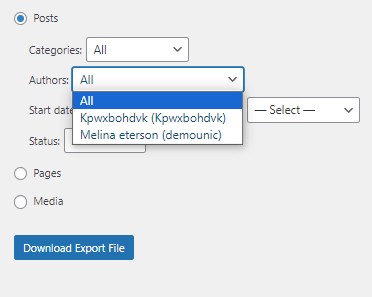
Another option for WordPress export posts is Authors, which enables you to filter posts published by one of the authors and export post details to a CSV file.
Export WordPress posts by date
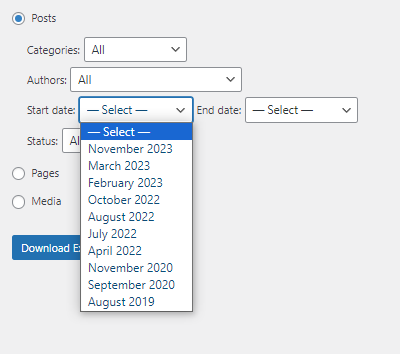
The next option allows you to export post details to a CSV file in a date range. By choosing one of the months listed in the Start Date and Date End fields, the posts in the specified range are exported.
Export a list of WordPress posts by status
If you want to filter posts based on their status, like published, scheduled, draft, etc., and export them, the last option is helpful.
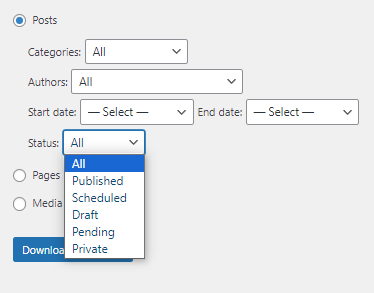
After choosing the options for filtering the posts to WordPress export posts, you need to click on the Download export file button. Then, you can see a CSV file downloaded and saved in your system.
As you may notice, the filtering options in the default export tool of WordPress are not so flexible. For example, there is no item for exporting posts by short description. It is also not possible to export a list of posts in two or more categories at once.
To solve this problem, you need to use a powerful plugin with flexible options for filtering and exporting details to CSV files.
Read more to get familiar with the WordPress posts/page bulk edit plugin as your ultimate solution.
Method#2: Use SQL query to WordPress export posts
If you have access to your WordPress database management system and you know how to run SQL queries, this method can work for you. We insist again, if and only if you are an expert in coding, follow the below instructions to export WordPress posts by running SQL query:
- Back up your WordPress database to use it in case of any problem after running the Query.
- Open PHPMyadmin by submitting the username and password of your WordPress hosting account.
- On this page, choose MySQL, and then open the PHPMyAdmin.
- Click on the Access PHPMyAdmin button, then click Database on the top menu to see a list of all WordPress databases.
- Now, you need to find the database of your website, which usually starts with the name of your website.
- Here, you can see a list of the tables within your database one of them is wp-posts.
- Wp-posts holds all of your post content, so you need to click on it to see the related rows like:
- post revisions,
- titles,
- name,
- date,
- etc.:
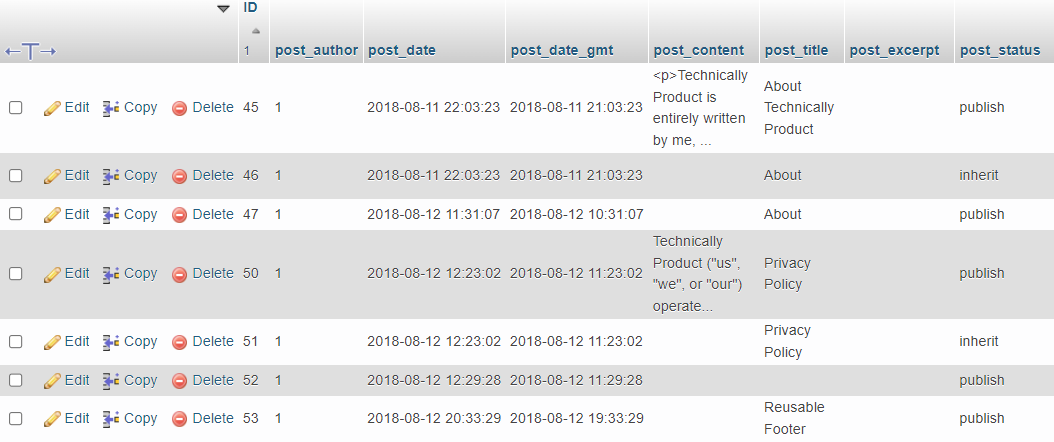
- You need to write down these row’s name in the mySQL query like below:
SELECT post_title, post_name, post_date, post_modified FROM
wp_posts WHERE
post_type = 'post' AND post_status = 'publish' ORDER BY post_date
Note: You can add or remove the post data based on the details you want to export.
- Now, to run this query on your database, click on the SQL tab.
- Copy the above code and paste it in the empty box at the top of the page.
- Click the Go button on the right corner of the page.
- Finally, you need to click on the Export button in the ‘Query results operations’ section.
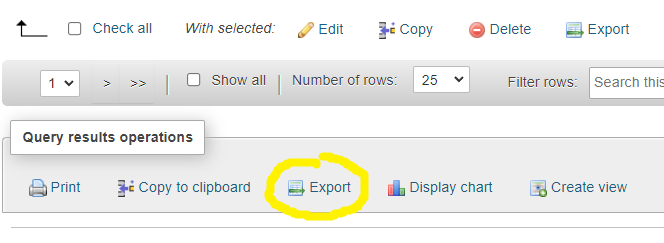
- Change the dropdown list of the Format field to CSV.
- Mark Dump all rows.
- Click the Go button and Save your export file when prompted.
By using this method, you can export WordPress posts to CSV file however, it is not possible to filter the posts and export some of them as you want.
In the next method, we are introducing the WordPress post bulk editing plugin with a lot of amazing features for filtering the exact posts that you need to export from your website.
Export WordPress post details to CSV file by WordPress posts bulk edit plugin
If you are looking for a plugin to help you export WordPress posts with flexible filtering options and easy to use interface, we recommend you use the WordPress posts/pages bulk edit plugin. Although this plugin has been designed to facilitate the process of bulk editing posts for store managers, it is possible to export a list of posts with a specific import/export button available in the main toolbar.
The good news about this plugin is that you can use a comprehensive filter form that supports all fields and meta fields of WordPress to filter a list of required posts and then export them.
Now, let’s see how.
Step 1: Download and install WordPress posts/pages bulk edit plugin
The first step for using this awesome plugin is to download and install it on your WordPress website.
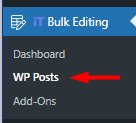
After activating the plugin, you can see the iT Bulk Editing tab in the WordPress dashboard. Then, to have access to the Import/Export button, you need to click on the WP Posts option to see the main toolbar on the top of the posts table.
Step 2: Export WordPress posts
In the main Toolbar, there are different tools available for filtering, bulk editing, and exporting posts to a CSV file. To use these tools for WordPress export posts, follow the below steps:
- Click on the Filter icon to filter the posts you want to export.
- Mark the posts you need to export in the table (it is optional).
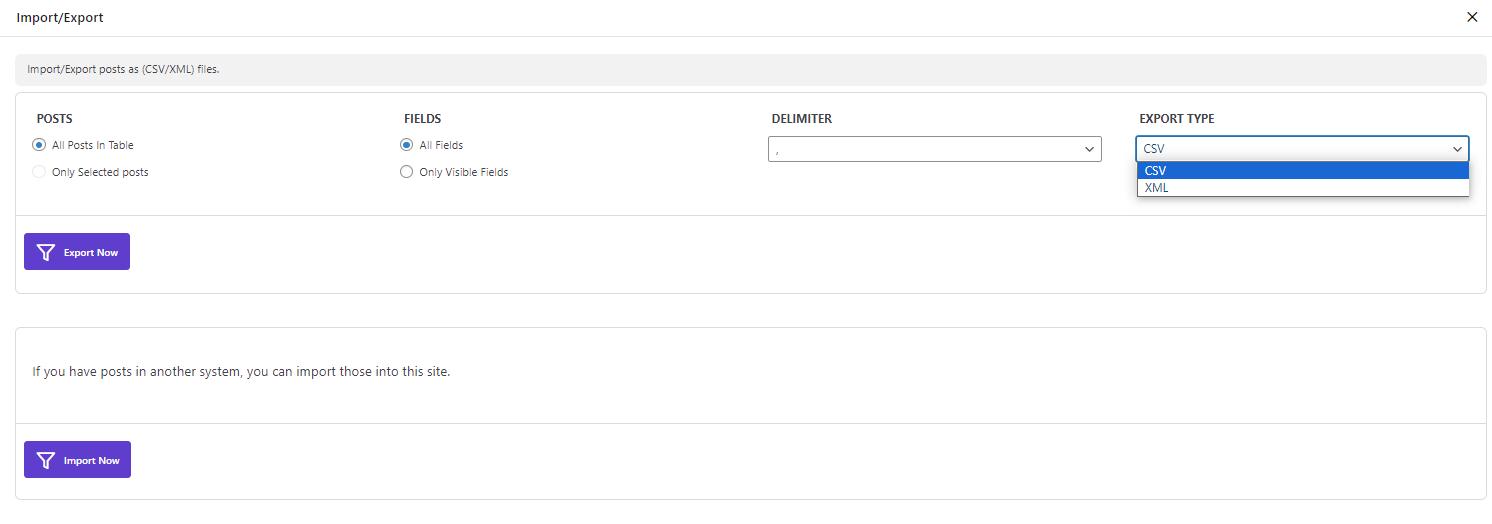
- Click on the Import/Export button to see the related form.

- In the import/export form, you can set one of the below options to export WordPress posts.
- For posts:
- All posts in the table: All posts that are shown in the table after applying the filter are exported.
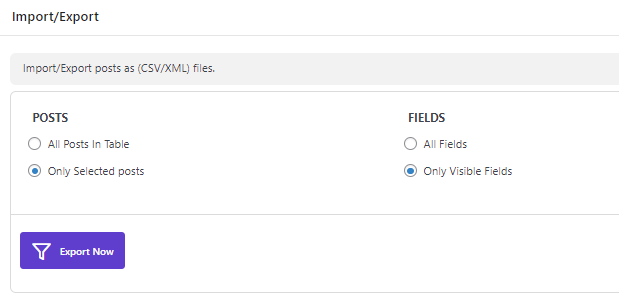
- Only selected posts: Just the posts that you have marked in the table are exported.
- For Fields:
- All Fields: All WordPress fields and meta fields of the filtered posts are exported.
- Only Visible fields: Just the fields that are marked to be displayed in the table columns are exported.
- There is also an option for choosing the export file type. You can choose either CSV or XML from the list.
- Finally, by clicking on the Export Now button, the exported data are downloaded as CSV or XML files to your computer.
Now, let’s make some examples to show you how to use this plugin for exporting WordPress posts.
WPBULKiT – Bulk Edit WordPress Posts / Pages plugin by ithemeland
The easy way to import and export post details to CSV files in WordPress

Export WordPress posts by short description to csv
Suppose that you published several posts about food, breakfast, and coffee on your website. Now you want to export those that have food in their short description.
Here, you can find how to export published posts with food in their post excerpt:
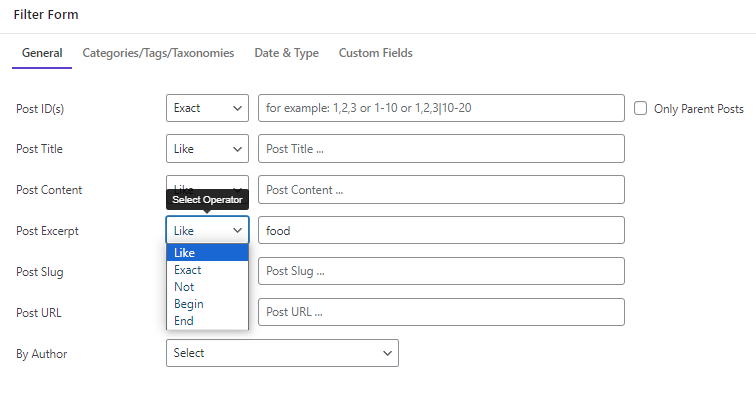
- Open the filter form and go to the General tab.
- Find the Post Excerpt field and choose one of the operators from the first combo box:
- Like: To filter the posts that their short descriptions contain food.
- Exact: To filter the posts that their short descriptions are food exactly.
- Not: To filter the posts that their short descriptions don’t contain food.
- Begin: To filter the posts that their short descriptions start food.
- End: To filter the posts, their short descriptions end with food.
- Write food in the text box.
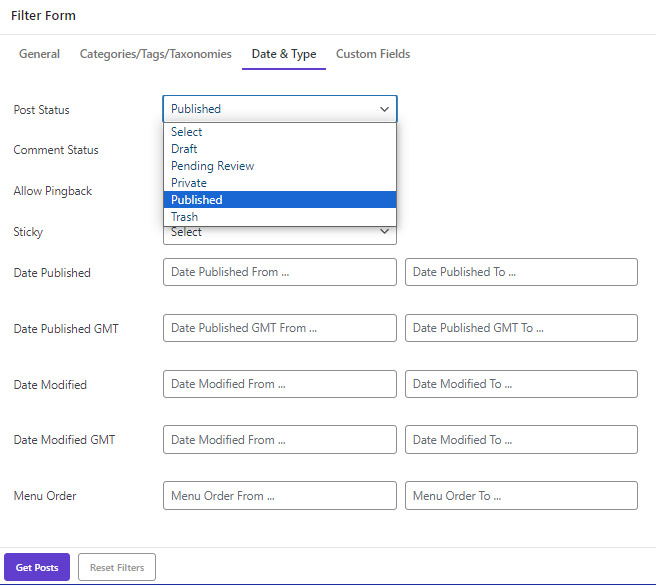
- Go to the Date & Type tab.
- Find the Post Status field and choose Published from the list.
- Press the Get Posts button.
- Mark some of the posts (If you want to export selected posts).
- Open the Import/Export form and export WordPress posts.
Export posts of specific categories in WordPress
The steps to export WordPress posts to CSV by category are the same as in the previous example. The only difference is filtering the posts based on the categories you want.
To filter the posts by category, follow the below instructions:
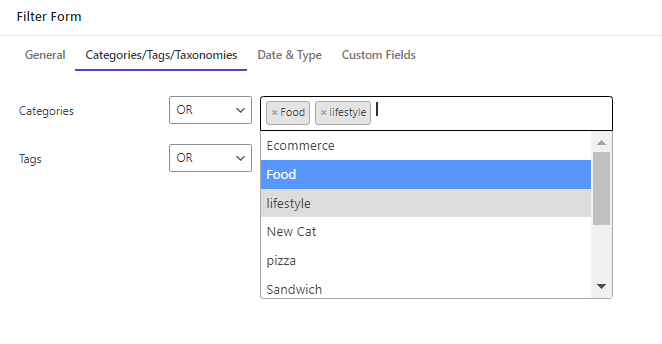
- Open the Filter Form and go to the Categories/tags/Taxonomies tab.
- Find the Categories field and choose one of the Operators from the dropdown list, including:
- OR: Filter posts that are assigned to one of the selected categories.
- And: Filter posts that are assigned to all of the selected categories.
- Not: Filter posts which are not assigned to the selected categories.
- Open the list of categories and choose some of them, like Food and Lifestyle.
- Press the Get Posts button to see the list of posts in the table.
WordPress export custom post type to CSV
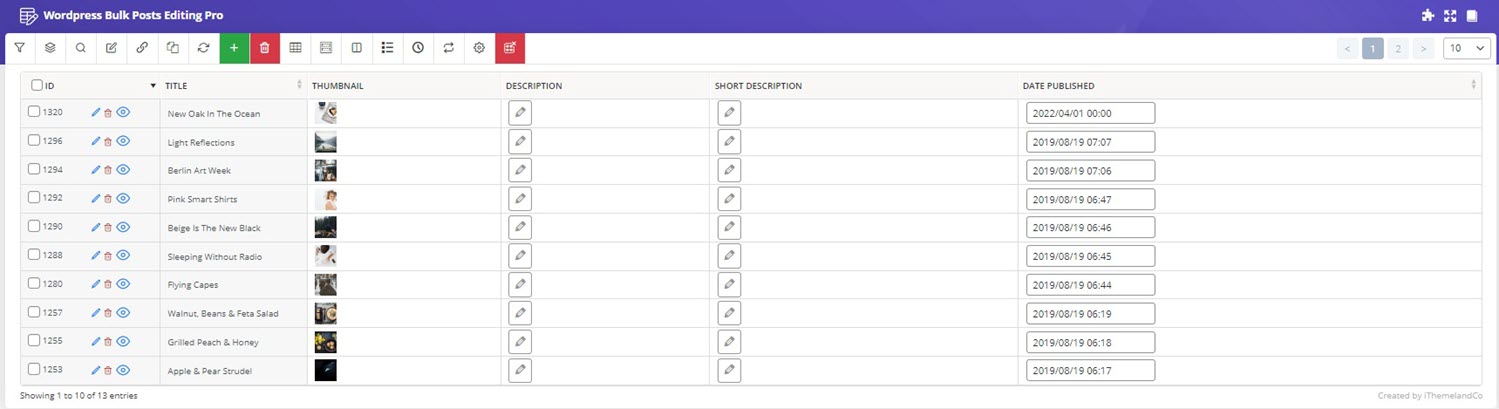
To export custom post type data, you can use the Custom type button in the Toolbar as illustrated below:

By using this tool, you can see a list of all custom fields on your website and choose one of them from the list to get all custom post type lists in the table. Now, you can export all or selected posts from the table by using import/export, as we explained before.
For example, we have selected “Elementor-library” custom posts from the list:
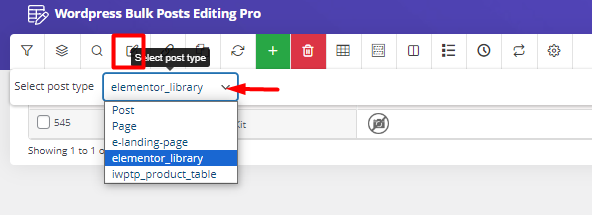
Now, the plugin will show a list of custom posts in the table:

So, to export one of the WordPress custom post types to CSV, try to:
- Select the custom post in the table.
- Open Import/Export from.
- Choose Only Selected Post and All Fields.
- Press the Export Now button.

If you open the downloaded CSV file, you can see all the information about the selected post like below:

WordPress export posts with images
To export posts with images in the WordPress posts bulk editing plugin, you need to add the Thumbnail column to the table. To add or remove any columns in the posts table, you can use the Column Manager tool. By clicking on this tool, the Columns Profile form is opened, and you can mark the Thumbnail column as illustrated below:
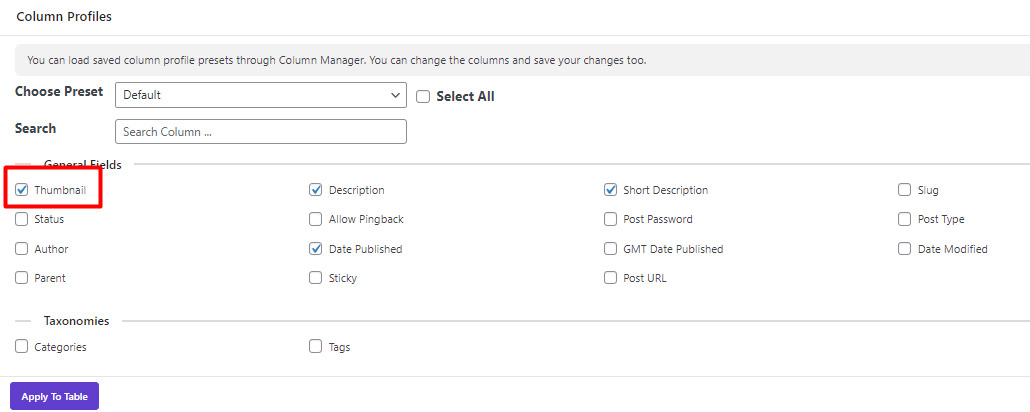
After pressing the Apply to Table button, you can see the posts images in the table.
Now, you can easily mark the posts you want to export in the table:
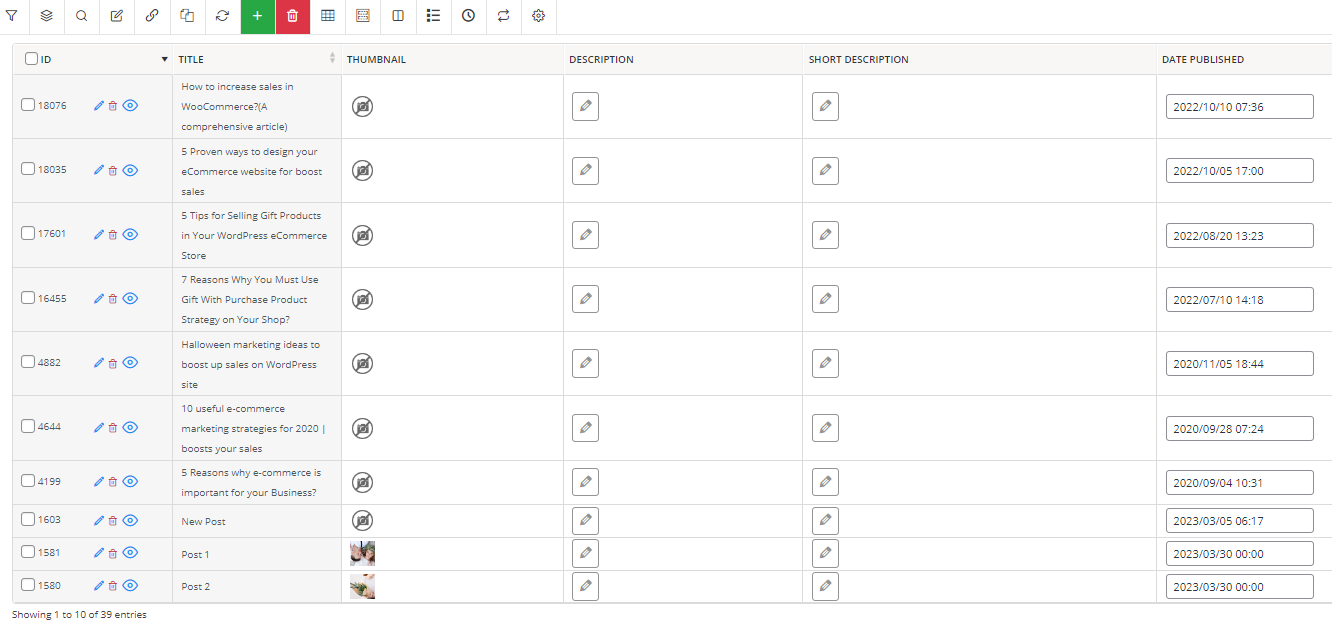
Then open the import/export form and use it to export the selected posts.
When WordPress exports posts with images, the result is like below in the CSV file:

Export WordPress content
WordPress export blog post content is very useful when you want to transfer articles from one site to another. To use the WordPress post export import plugin for this purpose, follow the below instructions:
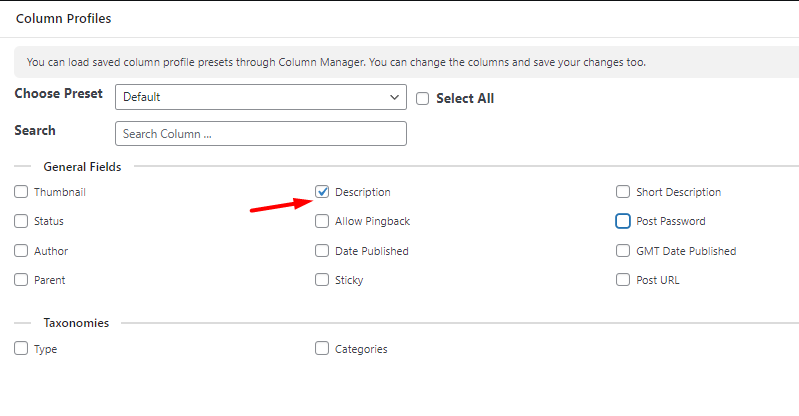
- Open the Column Profile form and mark Description to show the content column in the table.
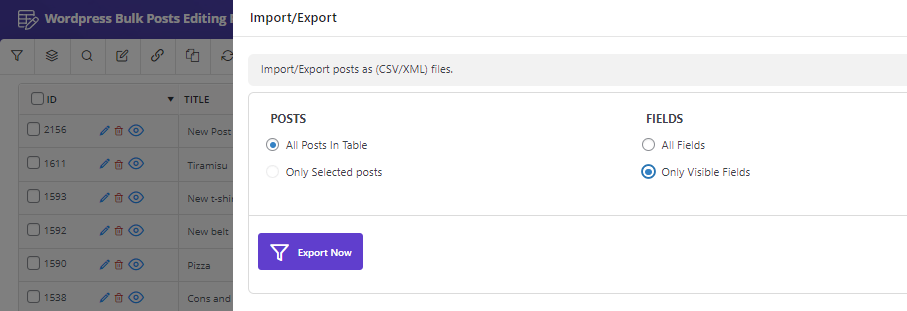
- Open the Import/Export form then choose All Posts in Table and Only Visible Fields.
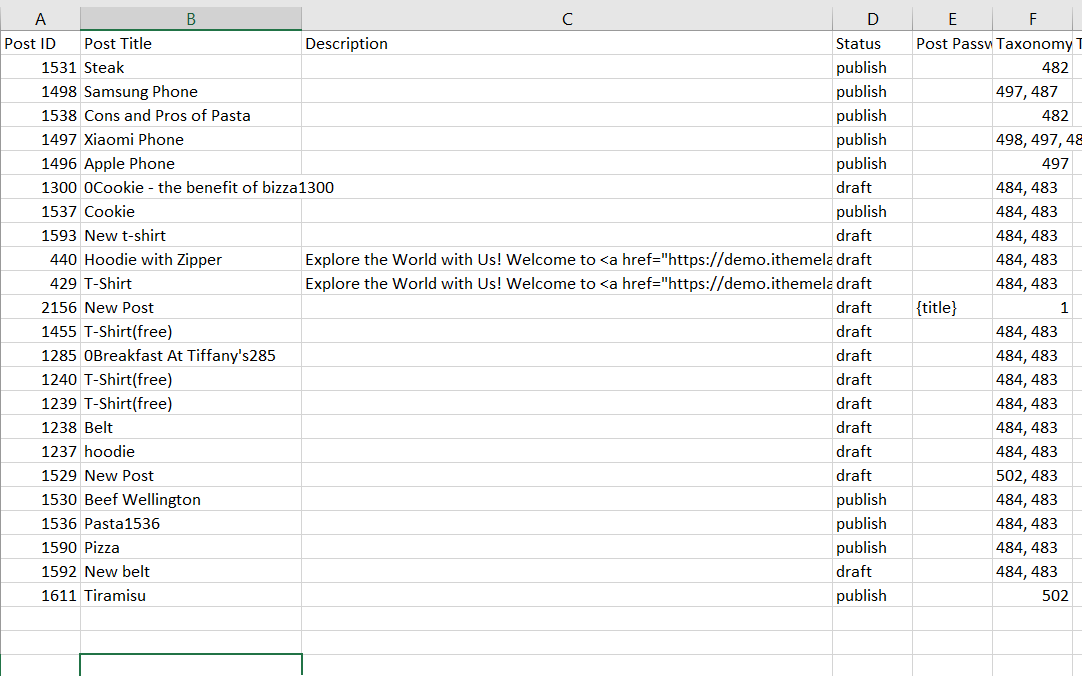
- Press Export Now to see WordPress export content in a CSV file like below:
WordPress export specific posts
The steps for WordPress export specific posts is very straightforward by the WordPress posts/page bulk edit plugin.
You just need to mark the post you want in the table, then open the Import/Export form and choose the below options:
- Only selected posts.
- All fields.
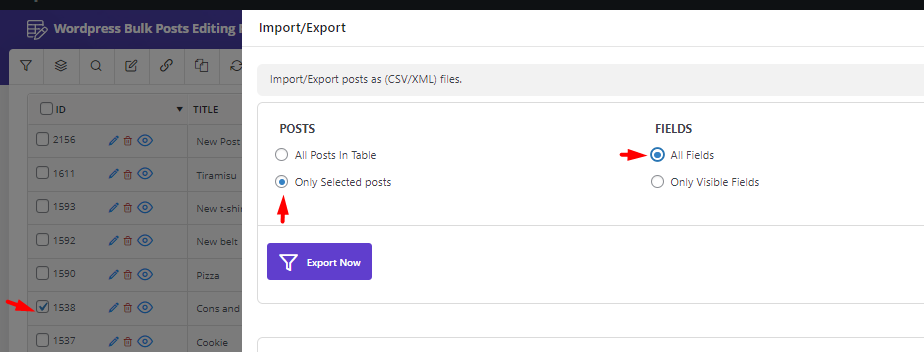
By pressing the Export Now button, the plugin will export selected posts WordPress data and you can review them in the downloaded CSV file as below:

Export WordPress pages
You can use the WordPress export pages plugin for WordPress export pages to CSV by following the instructions below:
- Open the Select Post Type dropdown list and choose Pages to see a list of all WordPress pages in the table.
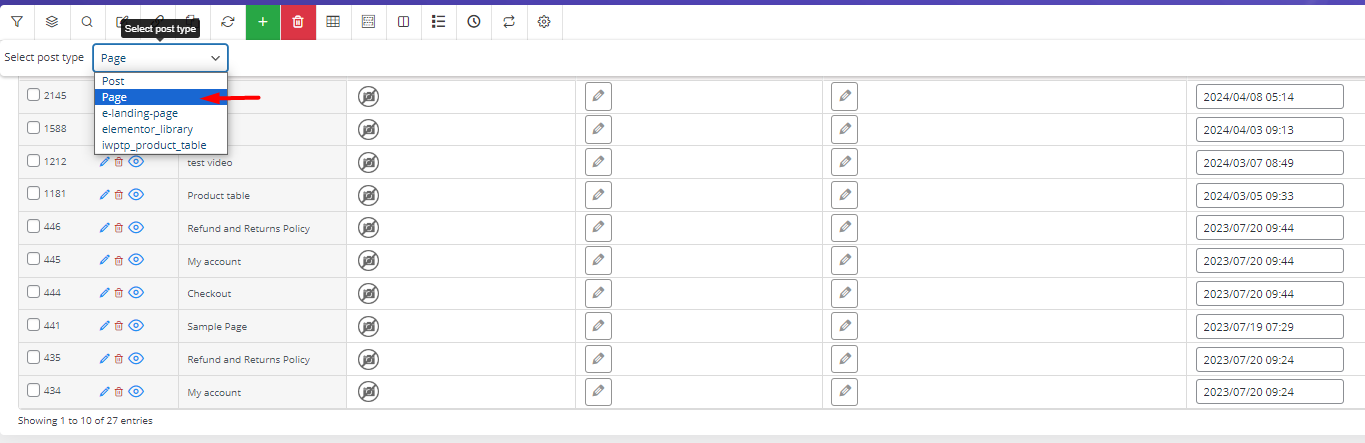
If you want to WordPress export specific page details, mark those pages in the table, then open the Import/Export form and select the below options:
- Only Selected Posts.
- Only Visible Fields.
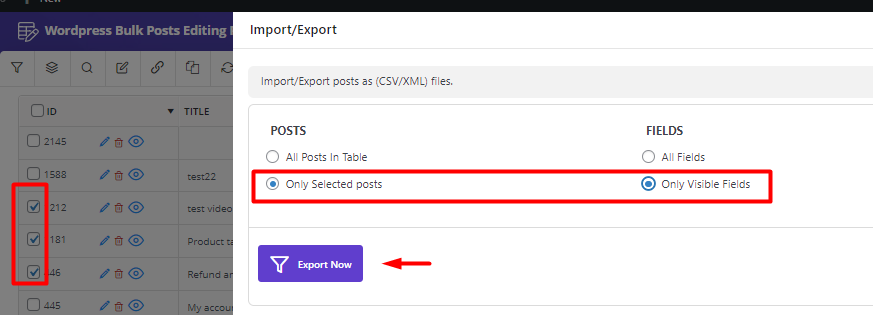
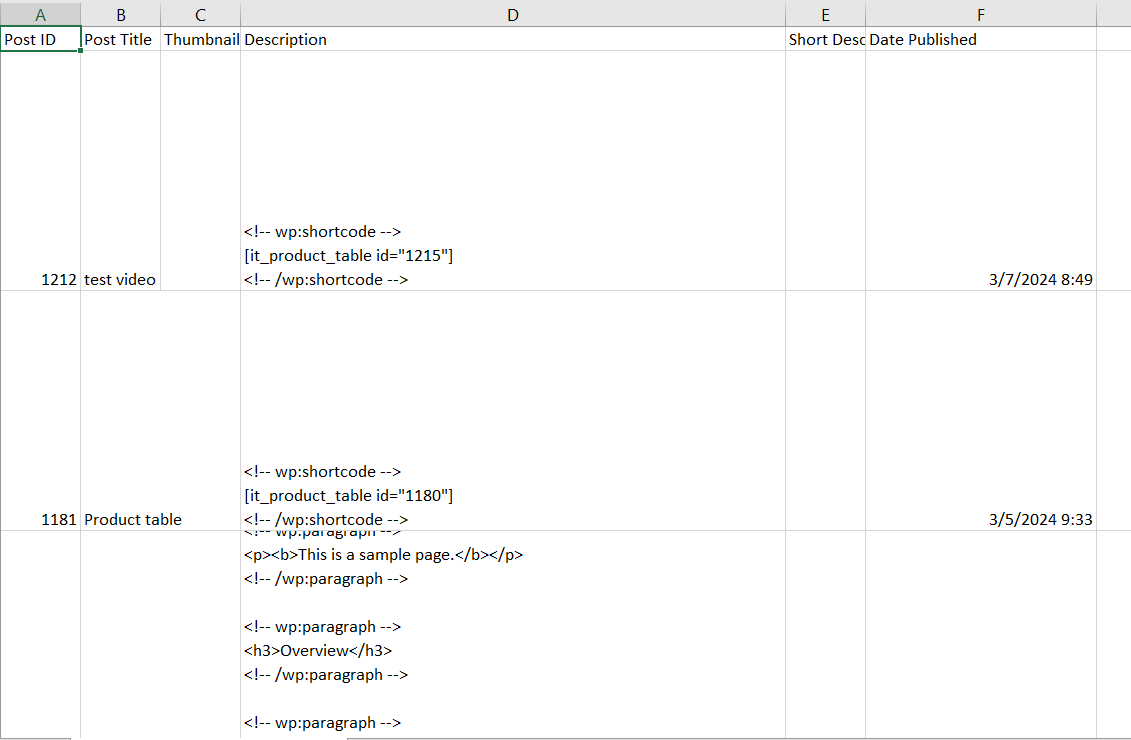
Finally, press Export Now to WordPress export pages in a CSV file which looks like below:
Compare WordPress export methods:(Default, SQL, Plugin)
Here’s a clear, concise comparison table of the three methods for WordPress export posts to CSV:
| Feature | Default WordPress Export | SQL Query Method | WordPress Bulk Edit Plugin |
|---|---|---|---|
| Ease of Use | ✅ Simple (built-in tool) | ❌ Requires SQL/database skills | ✅ User-friendly |
| Export Format | ❌ XML (not CSV directly) | ✅ CSV | ✅ CSV & XML |
| Filtering Options | ⚠️ Basic (date, author, category, status) | ❌ Manual query required | ✅ Advanced (custom fields, taxonomies, keywords, etc.) |
| Custom Fields | ❌ No | ✅ Yes (if manually queried) | ✅ Yes (supports meta fields) |
| Bulk Selection | ❌ Exports all matching posts | ❌ Exports all query results | ✅ Select specific posts or filter before export |
| Custom Post Types | ❌ No | ✅ Yes (with custom query) | ✅ Yes (built-in support) |
| Images/Media Export | ❌ No | ❌ No (text only) | ✅ Yes (includes thumbnails) |
| Technical Skill Needed | ❌ None | ✅ Advanced (SQL/PHPMyAdmin) | ❌ Minimal (no coding) |
| Best For | Quick backups (limited use) | Developers needing raw data | Non-coders needing flexible, filtered exports |
Video Tutorial: Export WordPress Posts
For a visual guide on exporting WordPress posts to CSV, check out the following video tutorial.
Pros & use cases of exporting posts to CSV
WordPress export posts to CSV unlocks powerful opportunities for content management and analysis. Whether you need to migrate data, perform bulk edits, or generate reports, CSV exports provide the flexibility to work with your posts outside WordPress.
Key Benefits (Pros):
- Backup & Migration: Safely store post data offline or transfer content to another WordPress site.
- Bulk Editing: Modify titles, content, or metadata in bulk using Excel/Google Sheets (faster than manual edits).
- Data Analysis: Analyze post-performance (e.g., dates, categories, tags) in spreadsheets for SEO/content strategy.
- Custom Reporting: Generate reports for clients or teams by organizing post data in a structured format.
- Integration: Import CSV data into other tools (e.g., CRM, email marketing platforms) for automation.
Top Use Cases
- Moving to a New Site: Migrate posts without plugins.
- Content Audits: Review/update old posts efficiently.
- Multilingual Sites: Export posts for translation services.
- Developer Workflows: Manipulate post data programmatically (e.g., via Python/PHP scripts).
- E-commerce: Export product posts for inventory management.
Common problems users face when exporting WordPress posts
Exporting WordPress posts to CSV can sometimes be tricky. Users often face issues like:
- Incomplete Data: Missing fields (custom fields, featured images, or metadata) in the exported file.
- Formatting Errors: Broken HTML, extra commas, or special characters disrupting CSV structure.
- Large File Handling: Timeouts or crashes when exporting thousands of posts at once.
- Plugin Conflicts: Export tools not working due to theme/plugin compatibility issues.
- Complex Filtering: Difficulty exporting only specific posts (e.g., by custom taxonomies or advanced criteria).
Solution: Use WordPress bulk posts editing plugin or validate data before importing elsewhere!
How to import WordPress posts from a CSV file
After WordPress export posts to a CSV file (for migration, bulk editing, or backups), you may need to import them back into WordPress—either to the same site or a different one. Below is a step-by-step guide to help you import posts from a CSV file efficiently.
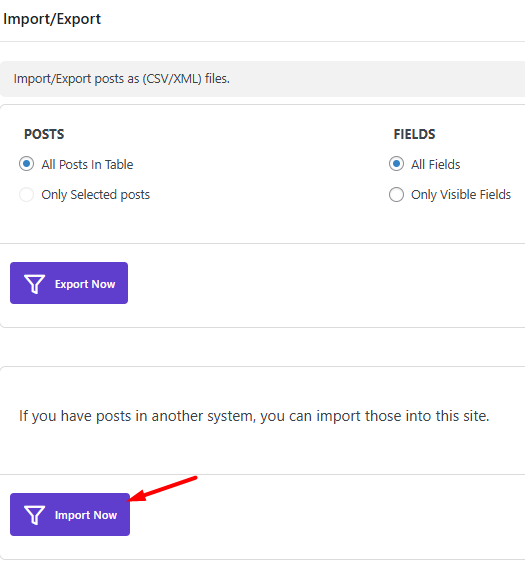
- Go to Tools > Import (or click on the Import button in the WordPress posts bulk editing plugin).
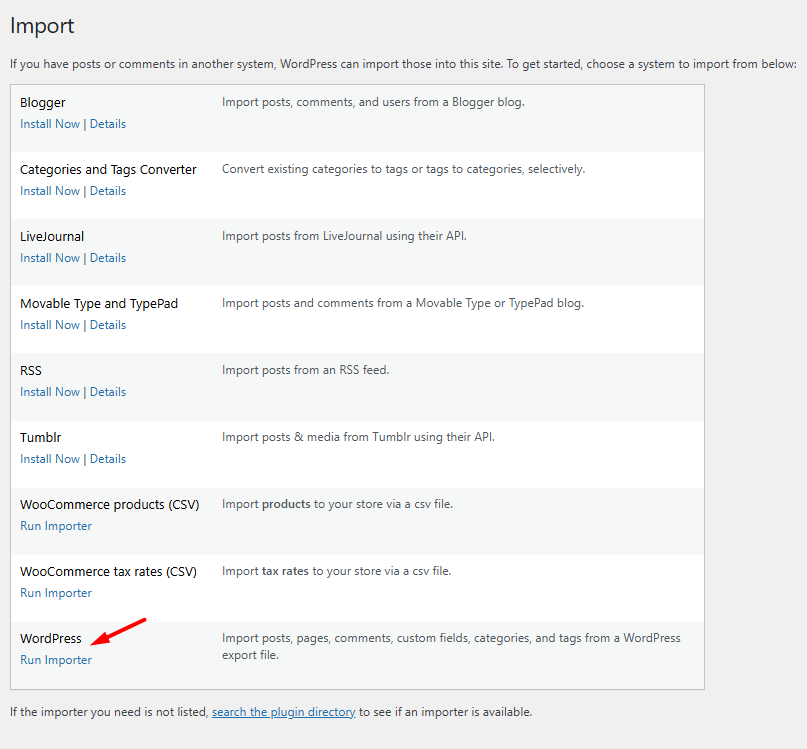
- Click on the Run Importer option.
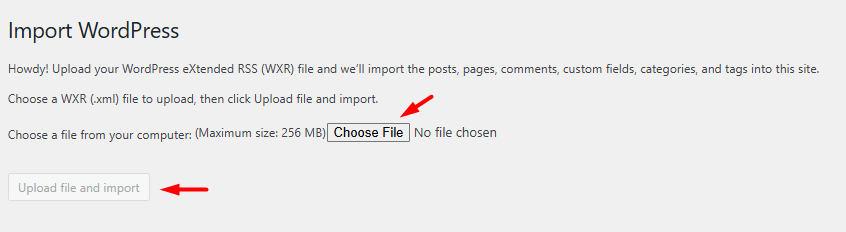
- Upload your XML file and assign posts to an existing user or create a new user.
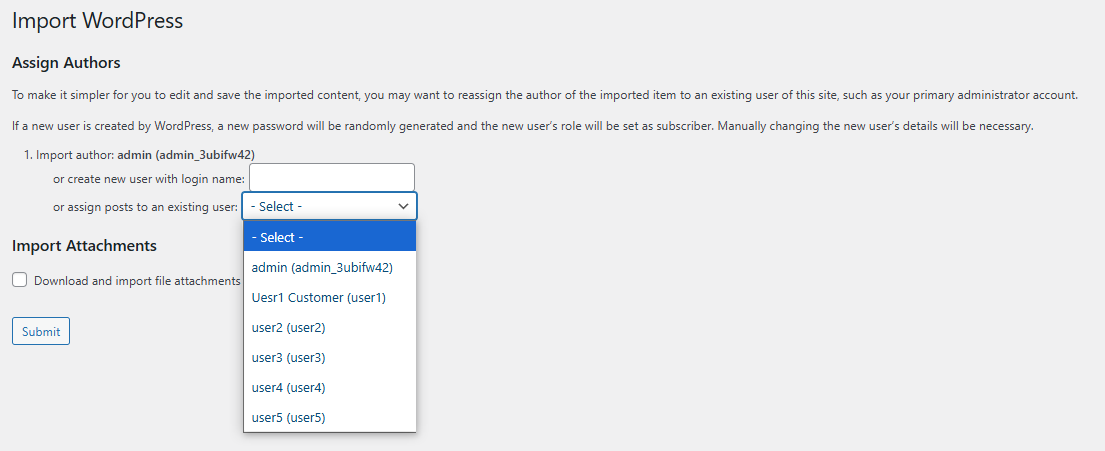
- Start the import process by pressing Submit button.
- Finally, verify imported posts in Posts > All Posts.
WPBULKiT – Bulk Edit WordPress Posts / Pages plugin by ithemeland
The easy way to import and export post details to CSV files in WordPress
Conclusion
Exporting WordPress data can be simple or advanced depending on your needs. The default WordPress export tool works well for basic XML backups, but it lacks flexibility for CSV and Excel exports.
If you need structured data for analysis, migration, or reporting, exporting WordPress posts, users, comments, and categories to CSV or Excel provides much greater control. Developers may prefer SQL queries for full customization, but for most website owners, using a dedicated export plugin is the fastest and safest solution.
Choosing the right export method depends on your technical skills, data size, and workflow. For large websites and advanced filtering needs, a professional export solution can save hours of manual work while reducing errors.
FAQ
How to export WordPress posts with SEO metadata?
To export WordPress posts with SEO metadata (like Yoast SEO or Rank Math data), use a dedicated plugin like Bulk Edit Rank Math SEO or SEOPress. These tools let you select custom fields containing SEO titles, descriptions, and focus keywords during export.
How to Export WordPress posts to Excel (XLS/XLSX)?
While WordPress doesn’t natively export to Excel, you can easily convert CSV files to XLSX. Export your posts using Tools > Export (for XML, then convert) or the WordPress posts bulk editing plugin, which supports direct XLS exports.
How do I export WordPress posts?
You can export WordPress posts by going to Tools → Export in your WordPress dashboard. Select “Posts” and download the XML file. For CSV or Excel format, you will need a plugin like WPBULKiT or a custom SQL query.
How do I export WordPress posts to CSV?
WordPress does not natively export posts to CSV. To export WordPress posts to CSV, you can use a dedicated export plugin like WPBULKiT or run a database query to generate a CSV file with the required fields.
Can I export WordPress posts to Excel?
Yes. You can export posts in CSV format and open the file in Excel. Some export plugins also provide direct Excel-compatible formats for easier data analysis.
How do I export WordPress users to CSV?
To export WordPress users to CSV, you need a plugin that supports user data export. The default WordPress export tool does not export users in CSV format.
How do I export WordPress posts with images?
To export posts with images, you must include the featured image or media URL field in your export file. Export plugins like WPBULKiT allow you to include image URLs directly in the CSV file.
Can I export WordPress comments?
Yes. You can export comments using the default WordPress export tool (XML format) or use a plugin like WPBULKiT to export comments into CSV format for easier analysis.
How do I export categories and tags in WordPress?
Categories and tags can be exported through the default export tool as part of XML files. For CSV exports, you need a plugin like WPBULKiT that supports taxonomy export.
What is the best way to export large WordPress websites?
For large websites, using WPBULKiT plugin is the safest method. It prevents server timeouts, allows advanced filtering, and generates structured CSV or Excel files efficiently.


